MOTS-c Explained: The Mitochondrial Peptide Scientists Are Watching Closely
14 August 2026
MOTS-c is a naturally occurring 16-amino-acid peptide, discovered in 2015, that is unusual because it is encoded not in the cell’s main (nuclear) DNA but within mitochondrial DNA itself. Researchers have linked it to cellular energy regulation, metabolic signalling, and the body’s response to exercise and stress, largely through studies in cells and mice. Human research is more limited and largely observational rather than interventional: exercise has been shown to raise MOTS-c levels in human skeletal muscle and blood, but no completed, peer-reviewed controlled trial has tested native MOTS-c as a treatment in people. This article explains what MOTS-c is, how it appears to work, and — carefully — what current evidence does and does not support.
What Are Mitochondria?
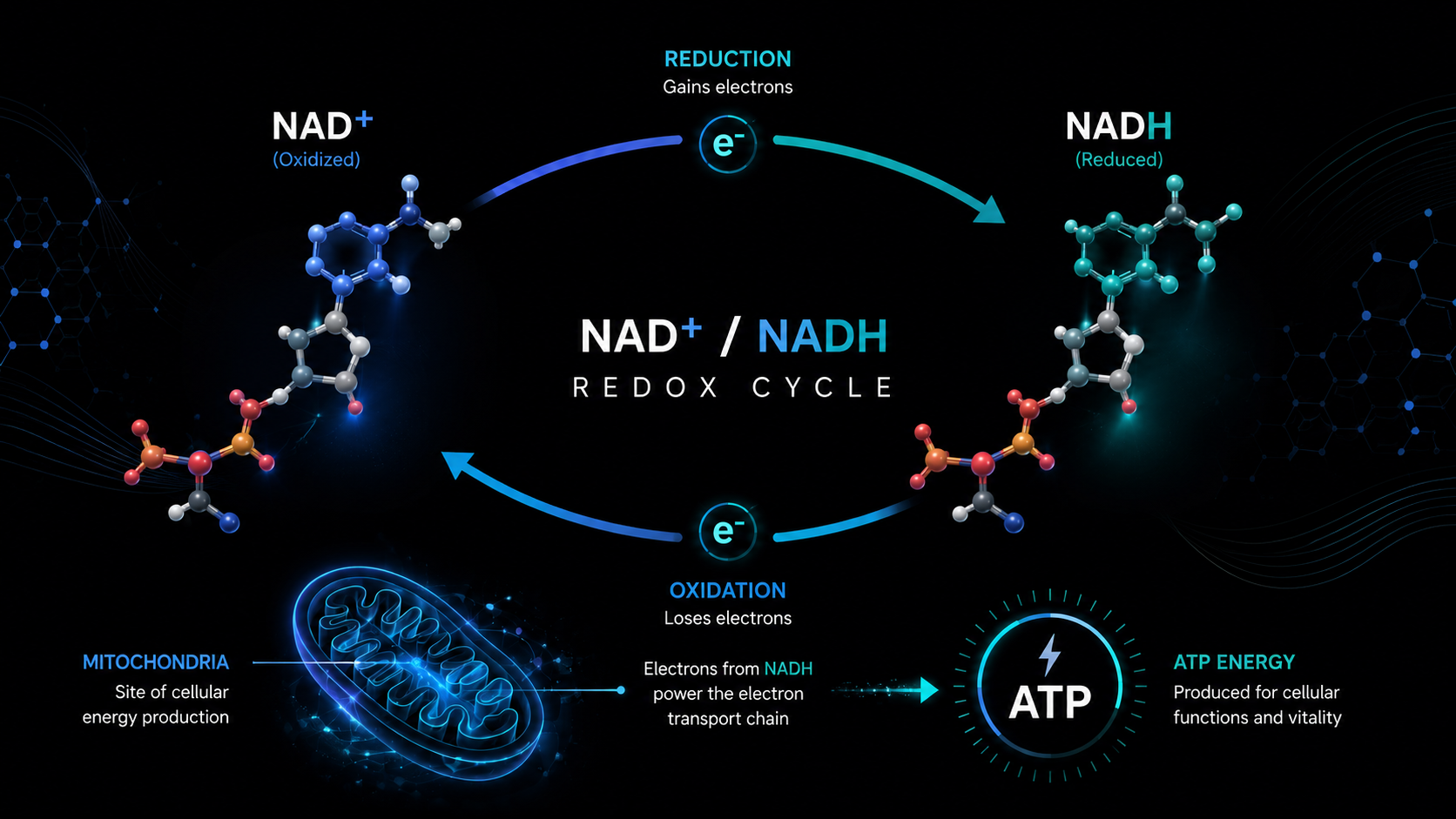
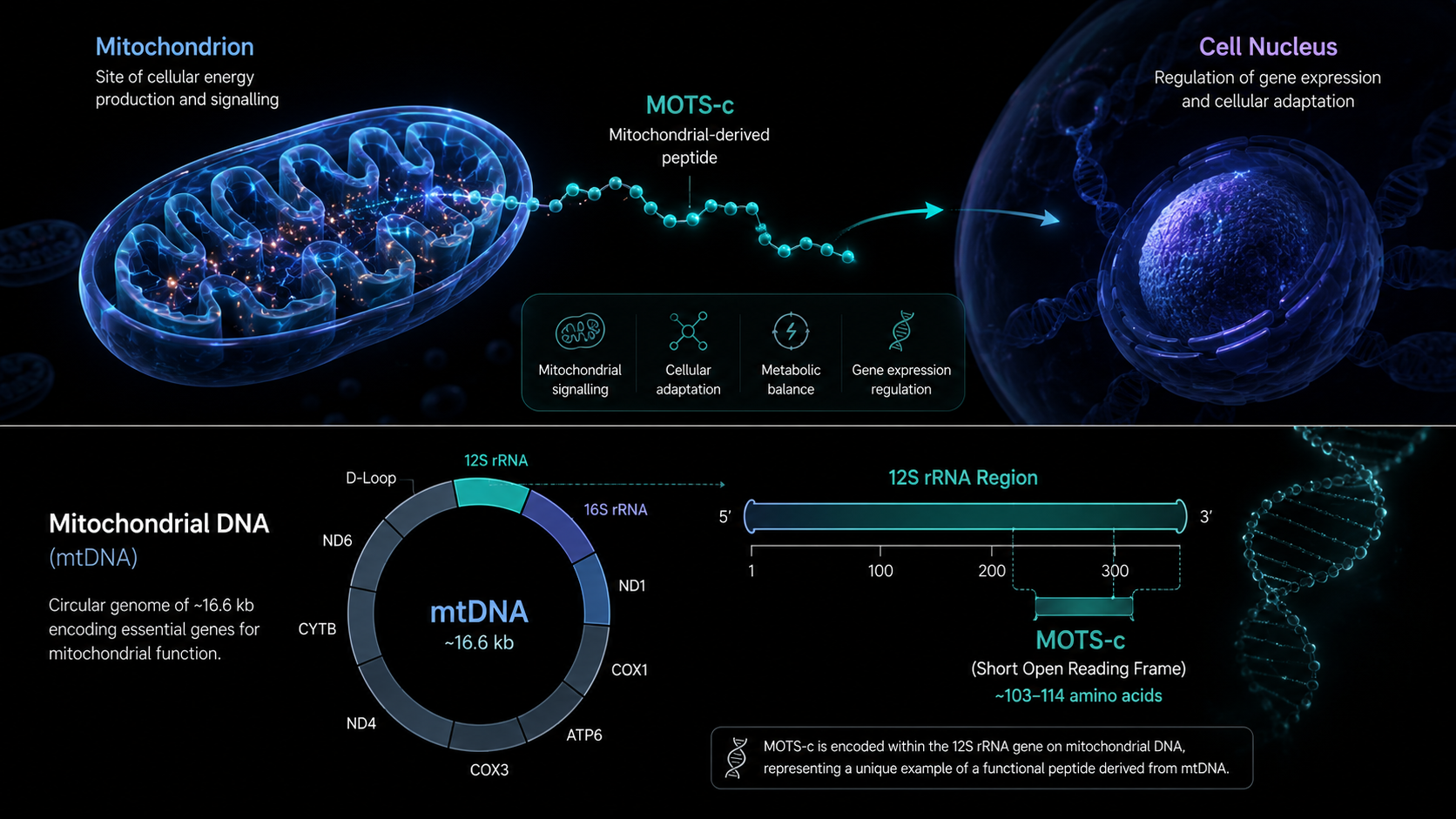
Mitochondria are the organelles inside almost every human cell responsible for converting nutrients into adenosine triphosphate (ATP), the molecule cells use as an immediate energy source. Beyond energy production, mitochondria participate in signalling, calorie sensing and stress response. Unusually among cellular structures, mitochondria carry their own small, circular genome — mitochondrial DNA (mtDNA) — separate from the much larger DNA held in the cell’s nucleus. Human mtDNA encodes 13 proteins involved in energy production, along with the RNA machinery needed to make them, and for decades this was assumed to be its complete functional output.
What Are Mitochondrial-Derived Peptides?
That assumption changed over the past two decades with the discovery that mitochondrial DNA contains additional short open reading frames (sORFs) — compact genetic sequences, nested within genes already known to encode other things — that are translated into small, biologically active peptides. These are known as mitochondrial-derived peptides (MDPs). To date, researchers have identified a small family of MDPs, including humanin (the first discovered, in 2001) and the small humanin-like peptides (SHLP1–6), alongside MOTS-c. Unlike the mitochondrion’s classical 13 protein products, which stay inside the organelle and support the electron transport chain, MDPs can act outside the mitochondrion — including, in some cases, systemically in the bloodstream — which is why they are of interest as potential signalling molecules between mitochondria and the rest of the body.
What Is MOTS-c?
MOTS-c (mitochondrial open reading frame of the 12S rRNA type-c) is a 16-amino-acid peptide identified in 2015 by a research team at the University of Southern California, led by Changhan Lee and Pinchas Cohen, in a study published in Cell Metabolism. The researchers found that MOTS-c regulates insulin sensitivity and metabolic homeostasis in mouse and cell models, with skeletal muscle appearing to be its primary target tissue. The peptide’s sequence is highly conserved across many species, including mice and humans, which researchers generally take as a signal of a conserved, biologically meaningful function rather than incidental genetic noise.
What Makes MOTS-c Unusual?
Most human proteins are encoded in nuclear DNA and manufactured using the “standard” genetic code shared across the genome. MOTS-c is different on two counts. First, its genetic instructions sit inside mitochondrial DNA, which uses a slightly different genetic code from the nuclear genome — meaning MOTS-c could not be produced correctly if simply read using standard nuclear rules. Second, despite originating in the mitochondrion, MOTS-c is understood to be synthesised in the cytoplasm outside the mitochondrion and can act well beyond it, including translocating into the cell nucleus under certain conditions — a genuinely unusual property for a mitochondrially-encoded molecule, and one of the main reasons it has attracted sustained research interest.
Where Is MOTS-c Encoded?
MOTS-c’s short open reading frame sits within the mitochondrial gene for 12S ribosomal RNA (part of the mitochondrial protein-synthesis machinery), rather than within any of the 13 conventional mtDNA protein-coding genes. This is reflected in its name: m itochondrial o pen reading frame of the 12S rRNA t ype- c. Because this sequence sits within a gene that already has an established job (building ribosomal RNA), MOTS-c was only identified through targeted bioinformatic searching for hidden coding sequences within mtDNA, rather than through conventional gene-hunting methods — part of why it wasn’t discovered until 2015.
Mitochondrial-to-Nuclear Signalling
A 2018 study published in Cell Metabolism by Kim, Son, Benayoun and Lee found that MOTS-c does not stay put under stress. Using cell culture models, the researchers showed that metabolic stress — induced experimentally by glucose restriction, serum deprivation or oxidative stress — caused MOTS-c to translocate from the cytoplasm into the nucleus within roughly 30 minutes, where it interacted with the transcription factor NRF2 and helped regulate genes containing antioxidant response elements. This was notable because, while the nucleus is known to send regulatory signals to mitochondria, a mitochondrially-encoded factor actively signalling back to the nucleus — so-called retrograde signalling — had not previously been demonstrated this directly. This mechanism has been characterised in cell and mouse models; direct confirmation of the same nuclear-translocation pathway in living human tissue has not been published.
MOTS-c and Metabolism Research
The original 2015 Cell Metabolism paper proposed a specific mechanism: MOTS-c inhibits the folate cycle and the linked de novo purine biosynthesis pathway, which increases levels of an endogenous AMP-mimicking molecule (AICAR) and activates AMP-activated protein kinase (AMPK) — a central regulator of cellular energy balance. In mouse models, MOTS-c administration prevented diet-induced obesity and insulin resistance, and reversed age-related insulin resistance in skeletal muscle. These findings describe mouse pharmacology following direct peptide administration; they are mechanistically informative but are not evidence of an established metabolic effect in humans.
Cellular Stress and Adaptation Research
Beyond metabolism, MOTS-c has been studied for its role in how cells respond to acute stress more broadly. A 2024 study in iScience, led by researchers from the original discovery group, identified casein kinase 2 (CK2) as a direct binding partner of MOTS-c in mouse skeletal muscle — the first specific molecular target identified for the peptide within muscle tissue. The same study found that a naturally occurring human genetic variant of MOTS-c (K14Q, discussed further below) binds CK2 far more weakly and fails to activate it in the same way, offering a possible mechanistic explanation for why carriers of that variant show different metabolic outcomes. This is recent, cell- and mouse-level mechanistic work; it identifies a plausible molecular target rather than establishing a clinical effect.
Exercise-Related Research
The clearest human data on MOTS-c comes from exercise physiology. A 2021 study in Nature Communications, led by Reynolds and colleagues (including members of the original USC discovery group), combined mouse and human work. In ten young male volunteers, a single bout of stationary cycling produced an approximate 12-fold increase in MOTS-c mRNA in skeletal muscle and a roughly 1.6-fold increase in circulating MOTS-c — a genuine, replicated human finding that MOTS-c expression responds to acute exercise. Separately, in the same paper, injected MOTS-c improved treadmill running capacity in young, middle-aged and old mice, with the most pronounced effect (roughly doubled running capacity) in old mice. It is important to keep these findings distinct: the exercise-induced rise in endogenous MOTS-c is a human observation; the performance-enhancing effect of administered MOTS-c is a mouse-only finding from the same study. A subsequent study of long-term endurance training in marathon runners found circulating MOTS-c levels associated with aerobic capacity, though this remains observational human data rather than an intervention trial.
Ageing-Related Research
MOTS-c’s connection to ageing research is more complicated than it first appears, and the way that complexity has unfolded is instructive. In 2015, the same year MOTS-c was discovered, a separate research group proposed in Aging Cell that a MOTS-c gene variant specific to Northeast Asian populations (m.1382A>C, which changes one amino acid in the peptide) might help explain the exceptional longevity observed in some Japanese centenarian cohorts — based on a relatively small dataset of 96 centenarians. A larger 2021 follow-up study by an overlapping author group, published in the journal Aging, examined the same variant across three cohorts totalling 27,527 people and an expanded centenarian dataset of 736. It found that male carriers of the variant had a higher prevalence of type 2 diabetes, particularly when combined with low physical activity, and — critically — found no association between the variant and lifespan once the larger dataset was used. In other words, the original “longevity gene” hypothesis was substantially revised by the same broader research community using much larger human data. This is a useful case study in how early, small-sample human genetic findings in this field can look quite different once tested at scale.
Animal Studies vs Human Evidence: What Has Actually Been Shown
Because it is easy to blur these categories, they are separated explicitly here.
| Evidence type | What has been shown |
| Cell/in-vitro | Core mechanism (AMPK activation via the folate-AICAR pathway; nuclear translocation under metabolic stress; direct binding to CK2) established in cultured cells |
| Animal (mouse) | Peptide administration improved insulin sensitivity, reduced diet-induced obesity, and increased physical performance in mice, including reversing age-related decline in old mice |
| Human — observational | Acute exercise reliably raises endogenous MOTS-c in skeletal muscle and blood in healthy adults; circulating levels are associated with aerobic fitness in trained individuals; a gene variant is associated with type 2 diabetes risk in sedentary men |
| Human — intervention | No completed, peer-reviewed controlled trial of native MOTS-c as an administered treatment has been published. The only human injectable data point is CB4211, a synthetic MOTS-c analog developed by a third-party biotechnology company, evaluated in a small Phase 1a/1b safety study (65 healthy adults, then 20 adults with fatty liver disease). Company-reported topline results described the analog as well tolerated with some favourable biomarker trends, but full peer-reviewed data have not been published, and this is a modified analog rather than native MOTS-c |
This table is the single most important part of the article for readers evaluating marketing claims: almost every specific, favourable finding about MOTS-c “working” comes from mice given direct peptide injections, not from controlled human trials.
Current Research Limitations
Several limitations should temper how this evidence is read. Nearly all mechanistic and efficacy data come from mouse studies using peptide doses and delivery routes (direct injection) that are not equivalent to any studied human protocol. The human data that exists is overwhelmingly observational — describing how endogenous MOTS-c behaves — rather than interventional, and the largest human studies (the genetic association work) required tens of thousands of participants to reach reliable conclusions, which illustrates how easily smaller studies in this field can produce findings that do not hold up. Measurement of circulating MOTS-c also varies across laboratories and assay methods, complicating comparisons between studies. Finally, the only known human injectable safety data concerns a proprietary analog rather than the naturally occurring peptide, and those results are limited to company-reported topline findings rather than full independent peer review.
Frequently Asked Questions
What is MOTS-c? MOTS-c is a naturally occurring 16-amino-acid peptide encoded within mitochondrial DNA, discovered in 2015, that has been studied mainly in cells and mice for its role in metabolic regulation, cellular stress signalling and the response to exercise.
Is MOTS-c naturally occurring? Yes. MOTS-c is produced endogenously by human cells from a sequence within mitochondrial DNA; it is not a synthetic invention, though synthetic versions and analogs (such as CB4211) have also been developed for research.
Where does MOTS-c come from? It is encoded within the mitochondrial gene for 12S ribosomal RNA — a short open reading frame nested inside a gene that already has another established function — rather than within any of the mitochondrion’s 13 conventional protein-coding genes.
What makes MOTS-c a mitochondrial-derived peptide? Mitochondrial-derived peptides are functional peptides translated from short open reading frames within mitochondrial DNA. MOTS-c belongs to this small family, alongside humanin and the SHLP peptides, distinguishing it from the mitochondrion’s classical protein products, which stay inside the organelle.
Has MOTS-c been studied in humans? Yes, but mainly observationally. Human studies have measured how endogenous MOTS-c responds to exercise and how a genetic variant relates to metabolic risk. No completed, peer-reviewed controlled trial has tested administered native MOTS-c in humans; the one human injectable safety dataset (CB4211) concerns a synthetic analog, not native MOTS-c, and has only been reported in company topline form.
Is MOTS-c a proven exercise mimetic? Not in humans. “Exercise mimetic” is a term used in some of the animal-research literature to describe mouse findings where administered MOTS-c produced exercise-like metabolic effects. Human data shows MOTS-c rises naturally with exercise, which is a different claim from MOTS-c itself reproducing exercise’s effects when administered — that has not been established in people.
What does MOTS-c research suggest about ageing? Findings here have evolved. An early, small human genetic study proposed a MOTS-c variant might contribute to exceptional longevity; a much larger follow-up study by an overlapping research group found no lifespan association and instead linked the variant to higher diabetes risk in sedentary men. Mouse studies suggest late-life MOTS-c treatment can improve physical capacity in aged mice, but this has not been tested as an intervention in older humans.
What are the main limitations of current MOTS-c research? Most mechanistic and efficacy findings come from mouse studies using injected peptide at doses not tested in humans. Human evidence is largely observational rather than interventional, measurement methods vary between studies, and the only human injectable data concerns a modified analog with unpublished full results rather than the native peptide.
Conclusion
MOTS-c is a genuinely interesting subject in mitochondrial biology: a peptide encoded within mitochondrial DNA that appears able to signal back to the nucleus and influence metabolic pathways, discovered less than a decade ago and still being actively characterised. The cell and mouse data are substantial and mechanistically detailed. The human picture is real but considerably narrower — largely observational evidence that MOTS-c responds to exercise, plus genetic association data whose interpretation has already shifted once as larger studies became available. Significant questions remain about whether, and how, the mouse findings translate to people, and human intervention evidence is still in its earliest stages.
All compounds are supplied for laboratory research purposes only and are not intended for human consumption.